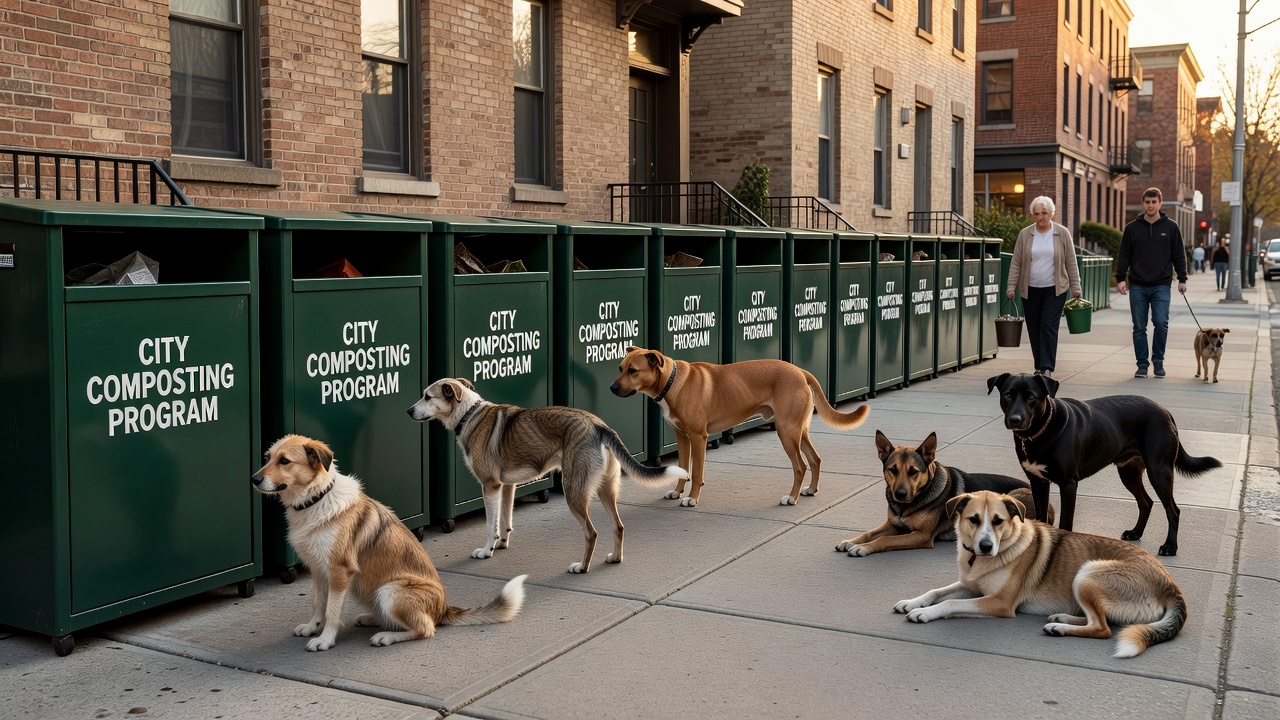
How Citywide Composting Programs Alter Stray Dog Pack Dynamics in Dense Residential Blocks
Citywide composting programs divert organic waste from landfills and reduce the amount of food scraps available in regular trash collection, which directly influences how stray dogs locate resources in crowded neighborhoods. Data from municipal waste audits shows that cities implementing mandatory composting see organic material drop by 40 to 60 percent in residential bins within the first year of rollout, and this shift changes the availability of easy meals for roaming packs. Researchers tracking collar data in several North American and European cities have documented corresponding adjustments in movement patterns, with dogs traveling farther between reliable food sources once household bins no longer overflow with kitchen waste.
Changes in Resource Availability and Foraging Routes
Compaction of food waste into sealed composting containers removes the scattered attractants that previously drew multiple dogs to the same alley or sidewalk each evening, and observations from urban ecology teams indicate packs now concentrate around commercial loading docks or park bins that remain unmonitored. In neighborhoods where collection schedules moved to weekly instead of daily pickup, the reduction in open trash has forced smaller subgroups to split off from larger assemblies, creating more fragmented social units that defend narrower territories along sidewalks and building courtyards. Studies conducted by municipal animal control divisions reveal that average pack sizes declined from eight to twelve animals to four or five within eighteen months after composting mandates took effect, while the frequency of inter-pack conflicts at remaining food sites increased.
Behavioral Adjustments Observed in Field Data
Tracking studies using motion-activated cameras placed near residential blocks demonstrate that stray dogs shift their peak activity windows earlier in the evening when composting pickup occurs before sunset, and this timing change reduces overlap with late-night human foot traffic. In dense blocks where green bins sit curbside, dogs have been recorded investigating new routes that follow compost collection trucks to transfer stations, creating linear corridors of movement that did not exist before program expansion. Australian urban wildlife reports note similar patterns, with GPS-collared animals showing increased use of green spaces and reduced time spent in residential alleys once organic waste volumes dropped.
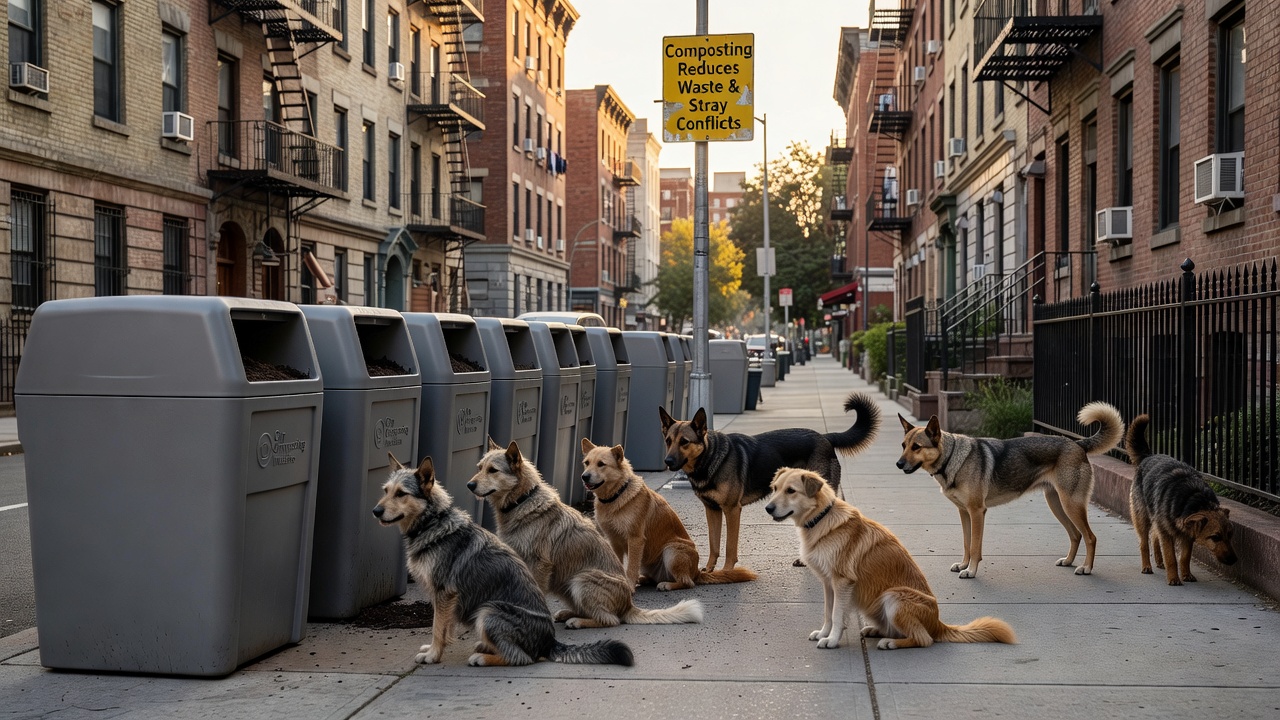
But here's the thing: when food becomes less predictable, dominant individuals within packs spend more time guarding access points rather than sharing discoveries, and this leads to higher rates of dispersal among younger or lower-ranking members. Data collected through neighborhood surveys in November 2026 across multiple pilot districts recorded a measurable uptick in lone dogs appearing in previously pack-dominated blocks, suggesting that resource scarcity accelerates the breakup of established social groups.
Interactions with Human Infrastructure and Waste Infrastructure
Composting programs often pair with public education campaigns that encourage residents to rinse bins and secure lids, and these practices further limit residual odors that once guided dogs from block to block. City reports from Canadian municipalities show that enforcement of bin-cleaning rules correlated with a 25 percent reduction in dog-related complaints to animal services, while the same areas experienced a rise in reports of dogs crossing major roads to reach centralized compost drop-off points. Observers note that the physical placement of collection sites influences whether packs remain localized or expand their range, with clusters forming around shared community compost hubs in some districts and dispersing in others where private-bin programs dominate.
Longer-Term Population and Social Structure Trends
Longitudinal monitoring by university research groups indicates that sustained composting reduces overall caloric intake from human waste streams, which can slow population growth rates within stray groups over multiple breeding seasons. When combined with trap-neuter-return initiatives, the combined effect produces smaller, more stable packs that exhibit less territorial expansion into adjacent residential zones. Figures released by the European Environment Agency highlight how integrated waste policies in several member cities have coincided with stabilized stray populations, although direct causation remains under continued study through multi-year collar and camera arrays.
Conclusion
Citywide composting programs reshape stray dog pack dynamics by limiting accessible food, prompting shifts in group size, movement corridors, and social hierarchies across dense residential blocks. Municipal records and field observations demonstrate these changes occur within the first two years of implementation, with ongoing monitoring required to track secondary effects on human-animal interactions and public space use. Continued data collection from varied urban centers will clarify how waste infrastructure decisions continue to influence canine behavior patterns in evolving city environments.