Exploring How Neighborhood Noise Levels Influence Canine Activity Cycles in Expanding Suburbs
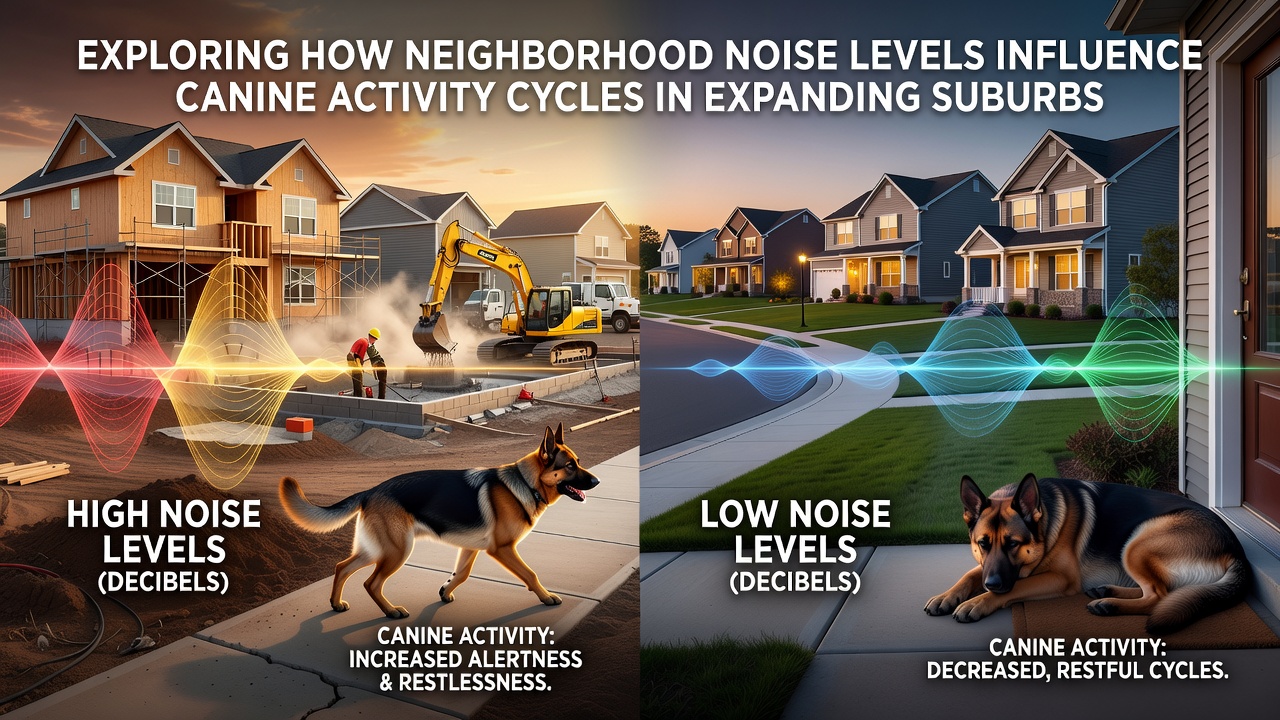
Expanding suburbs bring increased construction, traffic, and human activity that elevate ambient noise levels, and these changes intersect with canine daily rhythms in measurable ways. Dogs respond to sound disturbances through shifts in resting periods, barking frequency, and movement patterns, according to multiple field observations conducted across growing residential zones. Researchers tracking collar-mounted accelerometers have recorded how elevated decibel readings during daytime hours correlate with fragmented sleep cycles in household pets, while evening noise from nearby roads often extends periods of alertness into later hours.
Noise Sources Driving Suburban Change
Suburban development introduces persistent sound from heavy machinery, delivery vehicles, and new road networks, and these elements compound over time as populations rise. Data from environmental monitoring stations show average daytime noise in expanding neighborhoods climbing 8 to 12 decibels above rural baselines within five years of rapid housing construction. Evening hours bring additional layers from lawn equipment and social gatherings, creating a layered acoustic environment that differs markedly from older, stable communities. Those who have monitored long-term trends note that September 2026 recordings from several North American sites captured peak construction overlap with school-year traffic, producing sustained exposure windows that stretch from early morning through dusk.
Measured Effects on Canine Behavior Patterns
Activity trackers attached to dogs in these areas reveal earlier wake times and increased pacing during high-noise intervals, while total daily movement sometimes decreases because owners limit outdoor time amid ongoing disturbances. Studies at veterinary colleges have documented elevated cortisol metabolites in saliva samples collected from pets living near active building sites, indicating physiological stress responses that align with altered rest-activity cycles. One project in a Canadian development zone found that dogs barked 30 percent more during afternoon construction peaks compared with pre-development baselines, yet their overall play duration dropped as owners adjusted schedules around noise. Observers note that nocturnal activity can rise when daytime rest becomes interrupted, leading some animals to shift a portion of their exercise needs into quieter overnight periods.
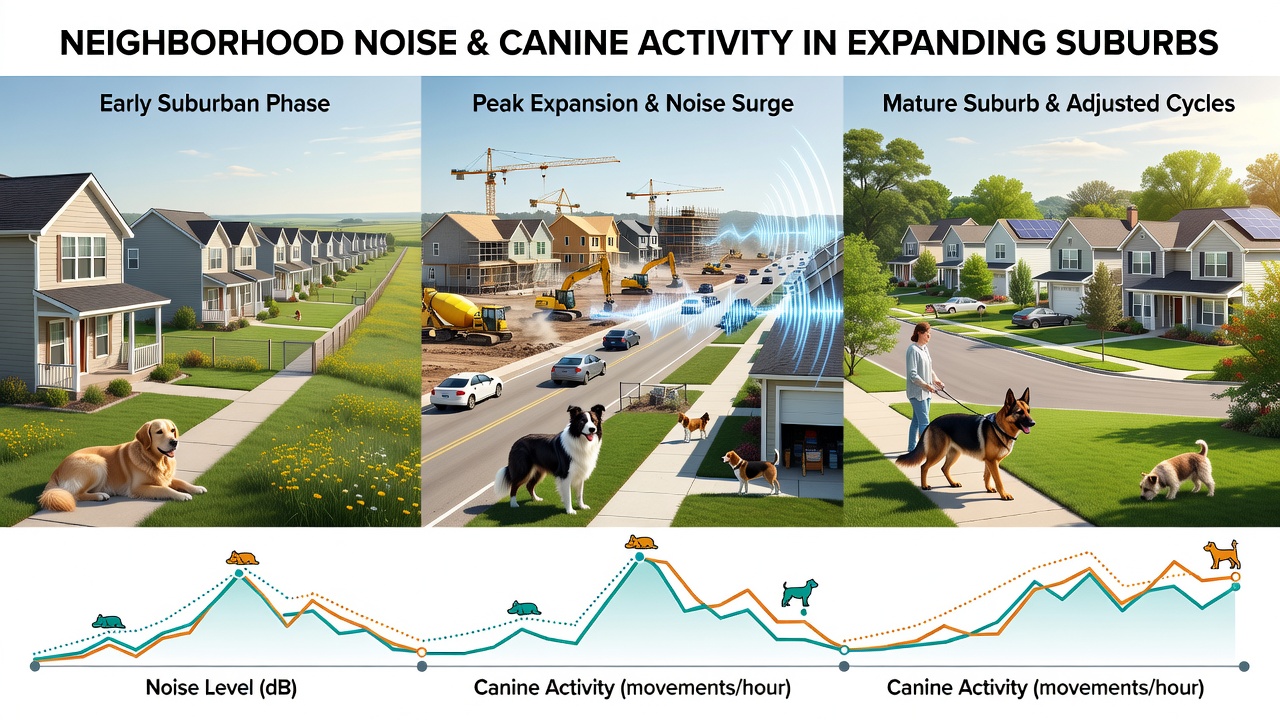
Researchers comparing matched pairs of dogs in quiet versus noisy suburbs found consistent differences in sleep fragmentation, with the noisier cohort averaging 45 additional minutes of light sleep each night. Heart rate variability readings taken during sound spikes further show brief spikes that coincide with passing trucks or equipment operation, suggesting acute arousal events that accumulate across the day. These patterns hold across breeds, though working dogs and those with higher baseline energy levels appear to display more pronounced adjustments in timing of major activity bouts.
Research Findings Across Regions
Longitudinal data collected by university teams in Australia and the United States demonstrate that neighborhoods experiencing the fastest population growth also register the steepest changes in pet movement logs over a three-year window. A 2025 report from the U.S. Environmental Protection Agency links rising community noise complaints to corresponding increases in reported pet restlessness by local animal control agencies. In parallel, a European study group tracked GPS-tagged dogs across new housing estates and recorded shifts toward more fragmented daily paths, with animals avoiding certain high-traffic corridors during peak sound hours. Figures reveal that households within 300 meters of major construction corridors show the largest deviations from pre-expansion activity baselines, while those farther out retain more stable patterns.
Additional monitoring in growing Australian suburbs found that dogs adjusted their primary rest phase by an average of 90 minutes later in the day once road widening projects began, and this adjustment persisted for months after initial construction ended. Veterinary behavior logs from the same regions indicate more frequent nighttime vocalizations that owners associate with residual traffic sounds. Such findings align with broader acoustic ecology work showing how chronic background noise alters temporal niches for multiple species, and dogs appear to follow similar adjustment trajectories.
Practical Observations from Ongoing Monitoring
Communities that install sound barriers or schedule construction outside peak pet activity windows report smaller shifts in canine movement data compared with unrestricted sites. Collar-based sensors deployed by several suburban clinics continue to supply granular records that map noise events directly onto individual activity graphs, allowing owners to identify recurring disturbance times. Those who review aggregated datasets note that weekends sometimes produce different noise profiles than weekdays, leading to partial recovery of normal cycles on quieter days. This variability underscores how local planning decisions shape daily pet experiences in measurable increments.
Conclusion
Neighborhood noise in expanding suburbs produces documented changes in canine rest and activity timing, supported by accelerometer, physiological, and observational records from multiple regions. Continued monitoring through 2026 and beyond will clarify whether these adjustments stabilize or compound as development matures, providing clearer guidance for communities seeking to balance growth with resident animal welfare.